Framework into practice

Make student thinking visible

Real classroom documents show how students plan, direct, verify, revise, and reflect, not simply what they produce.

A learning-rich evidence model

The process becomes part of the product

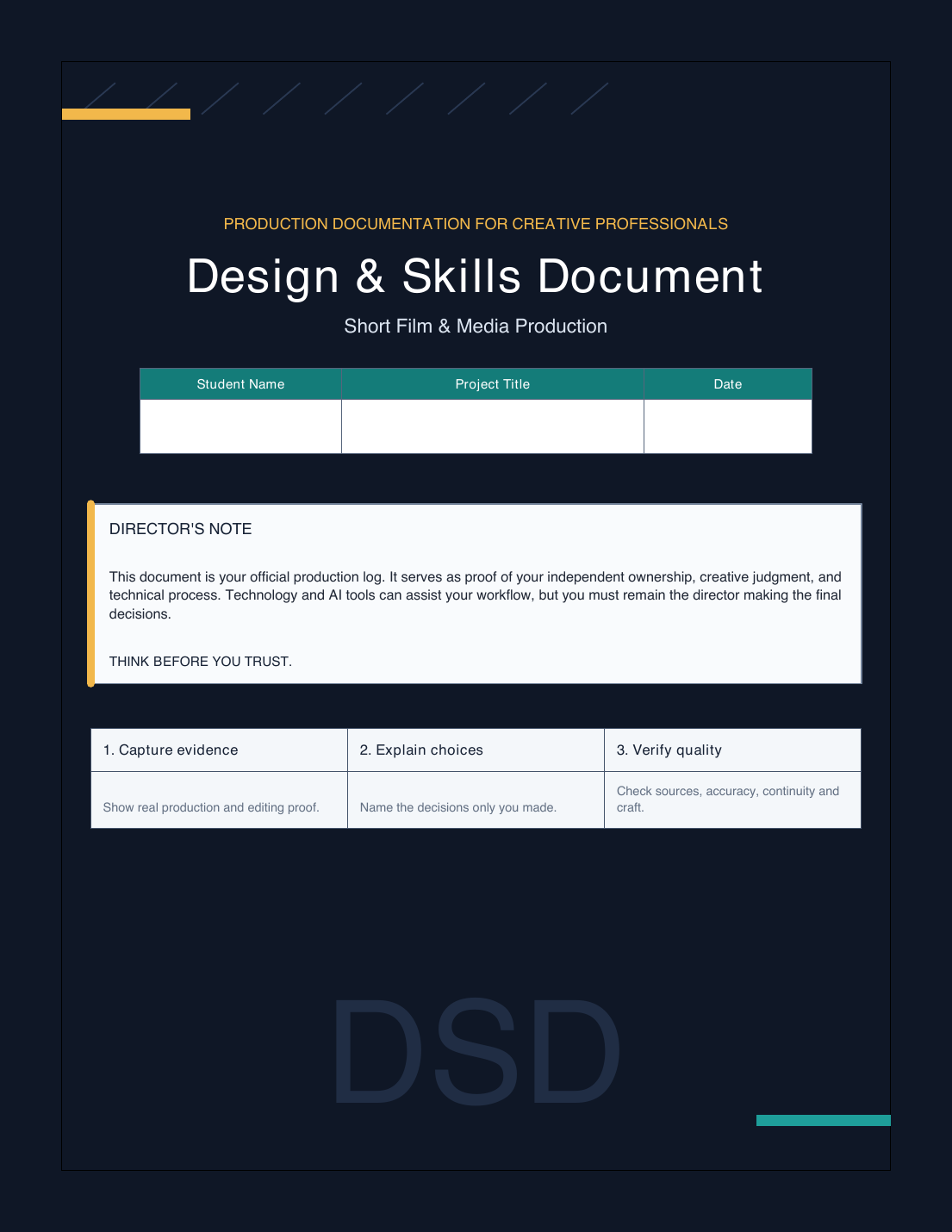
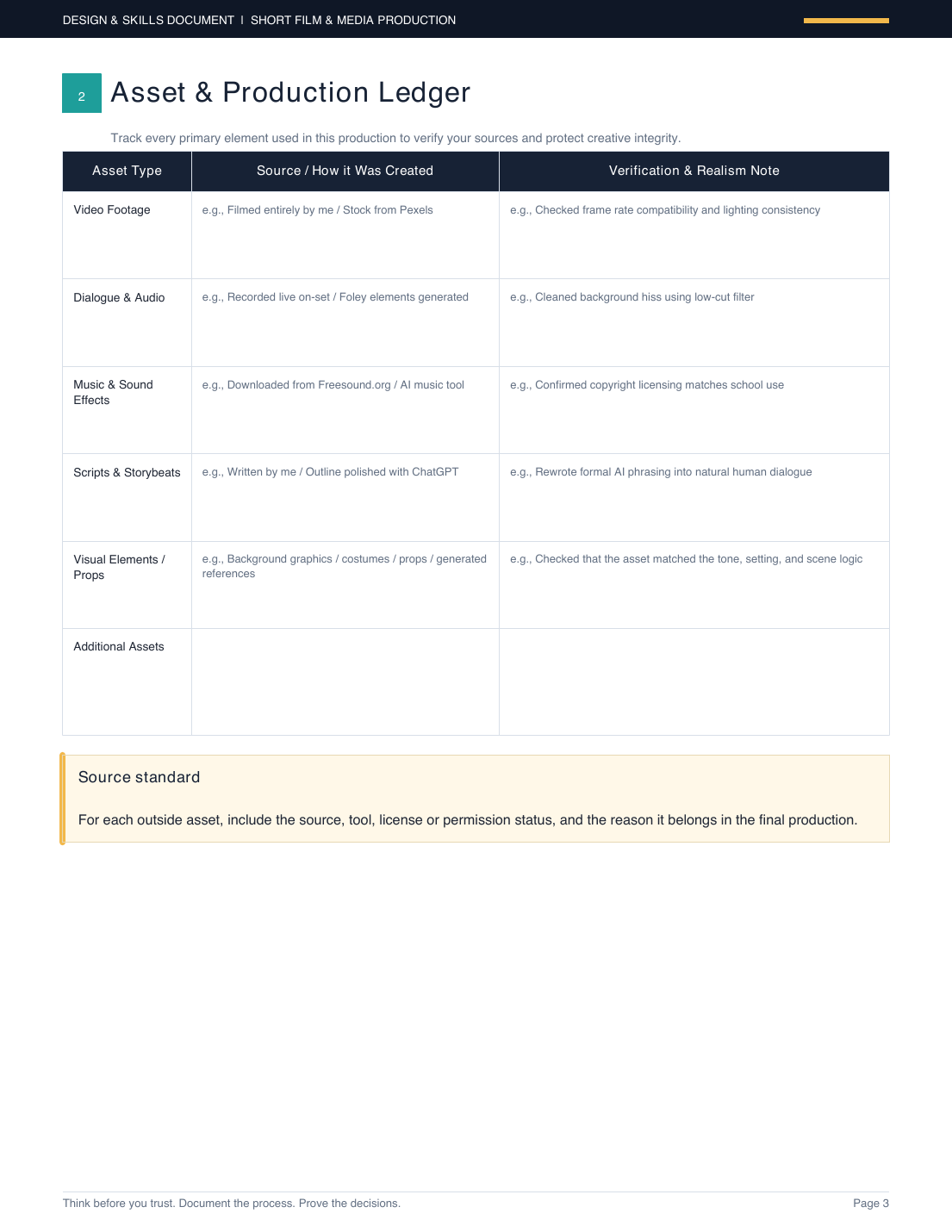
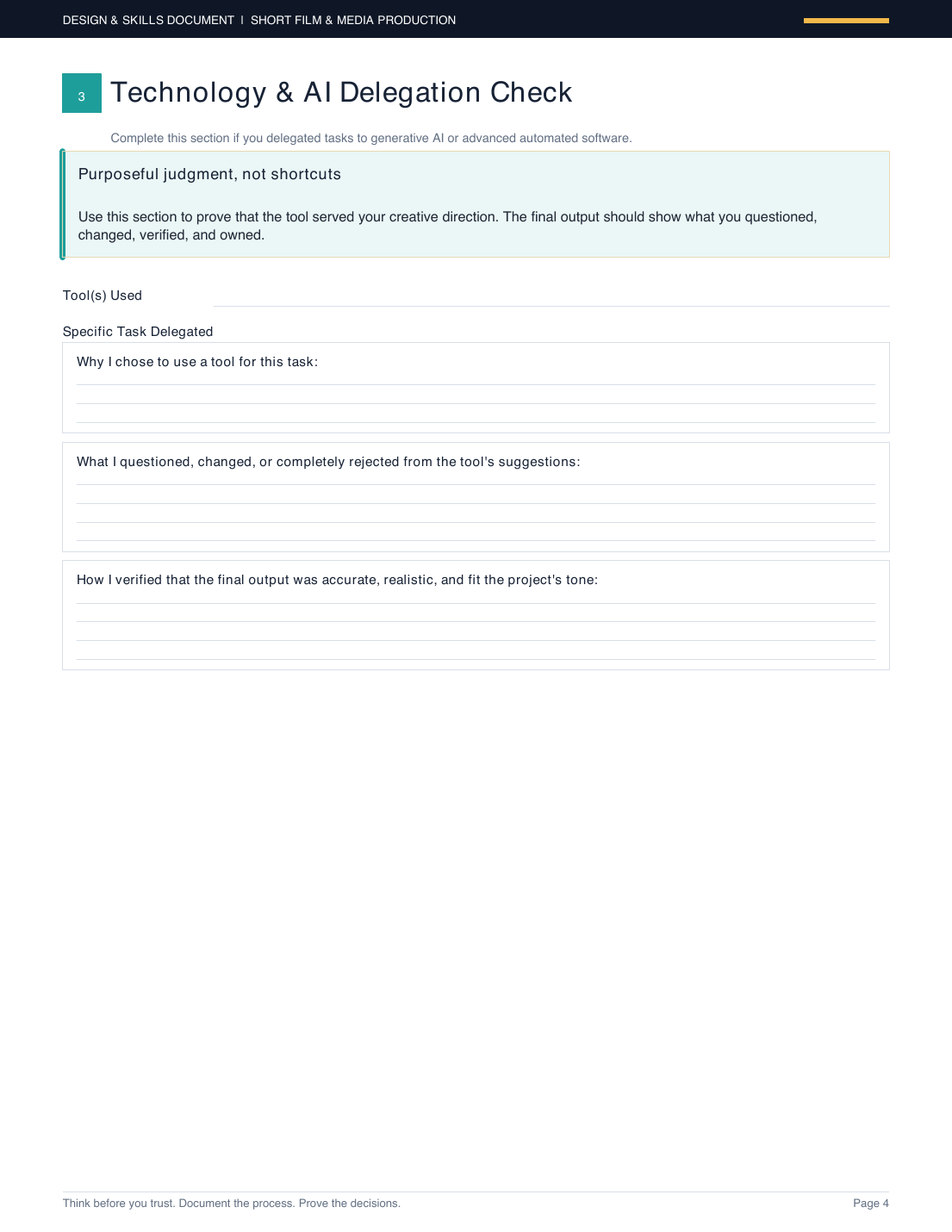
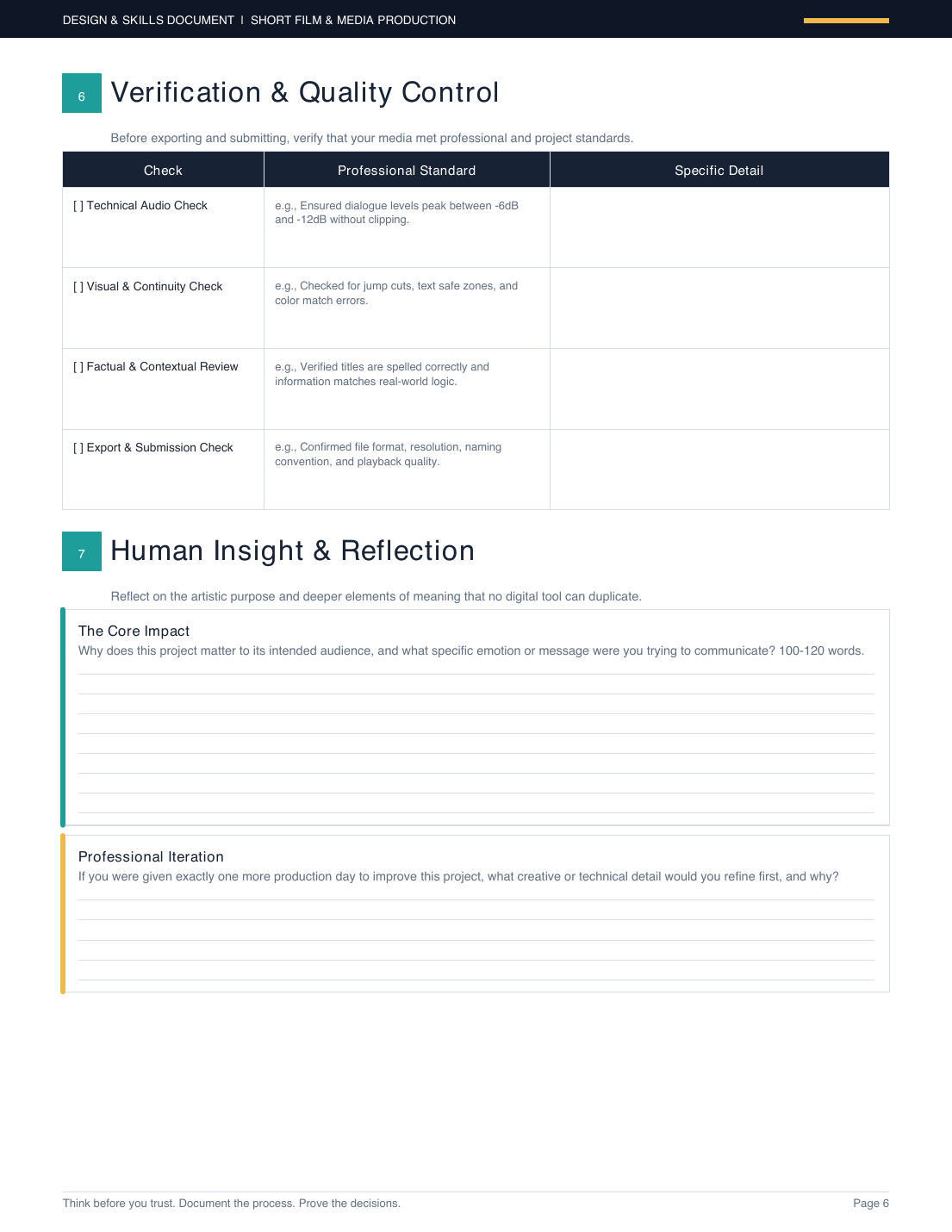
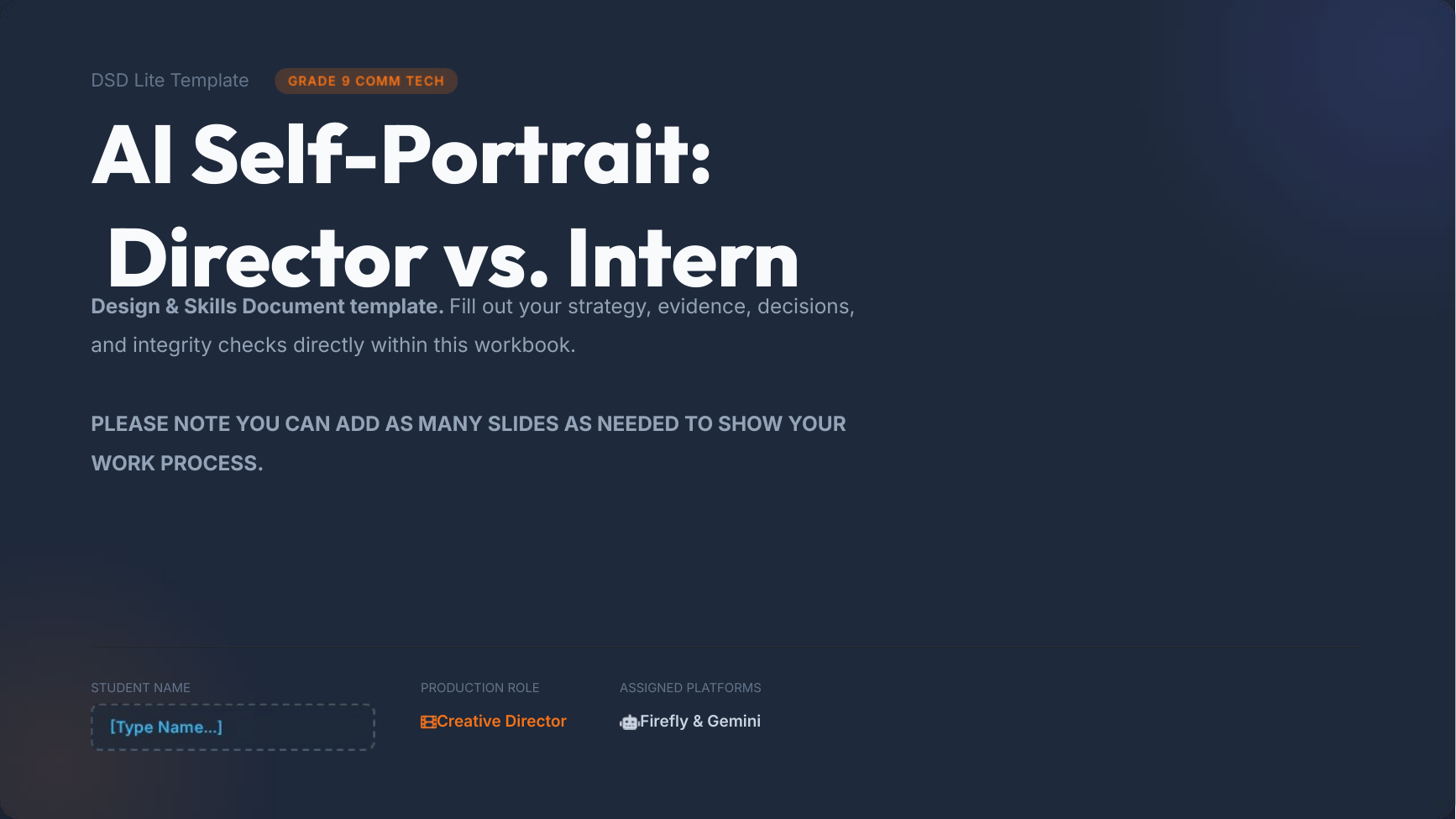
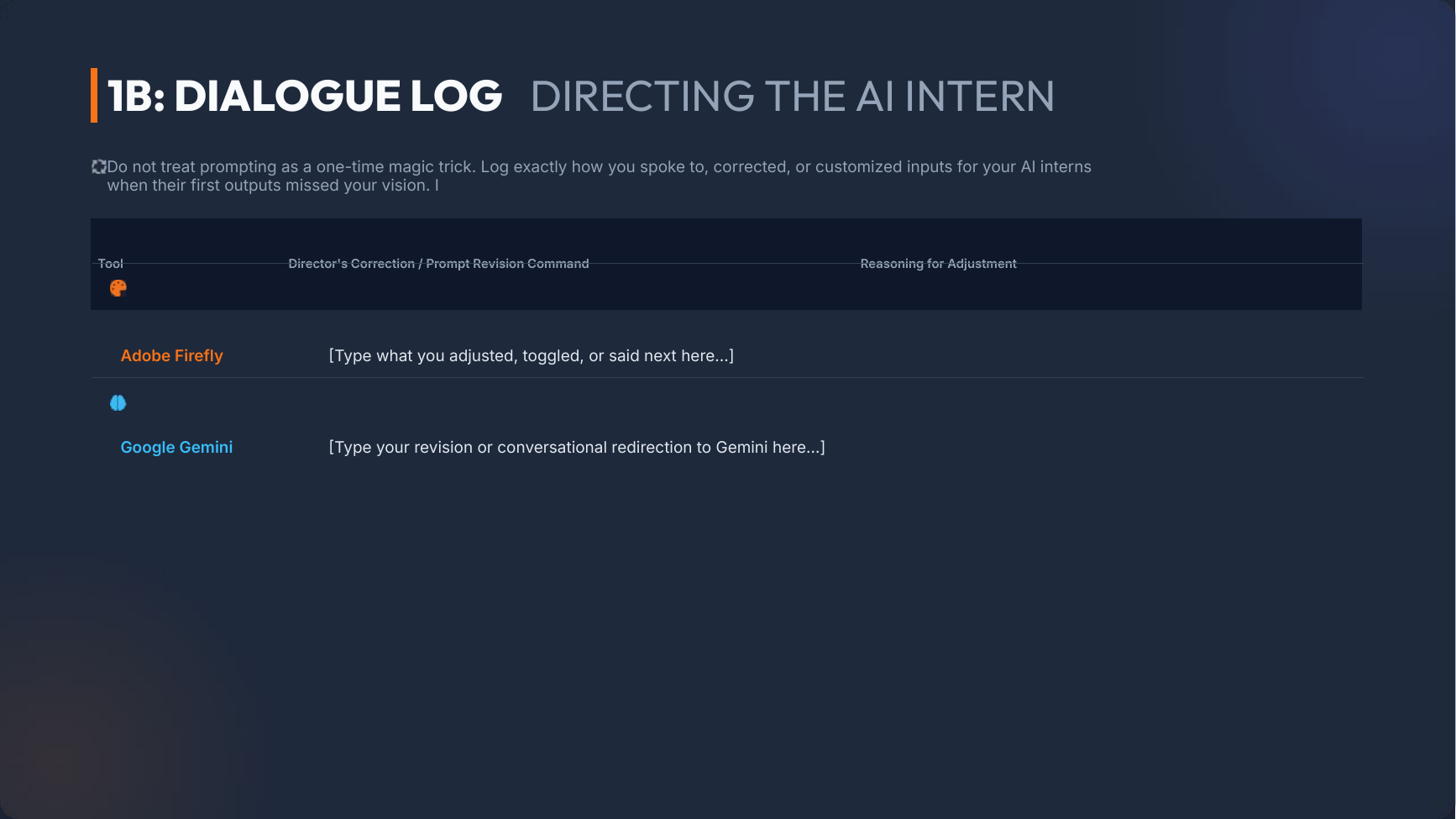
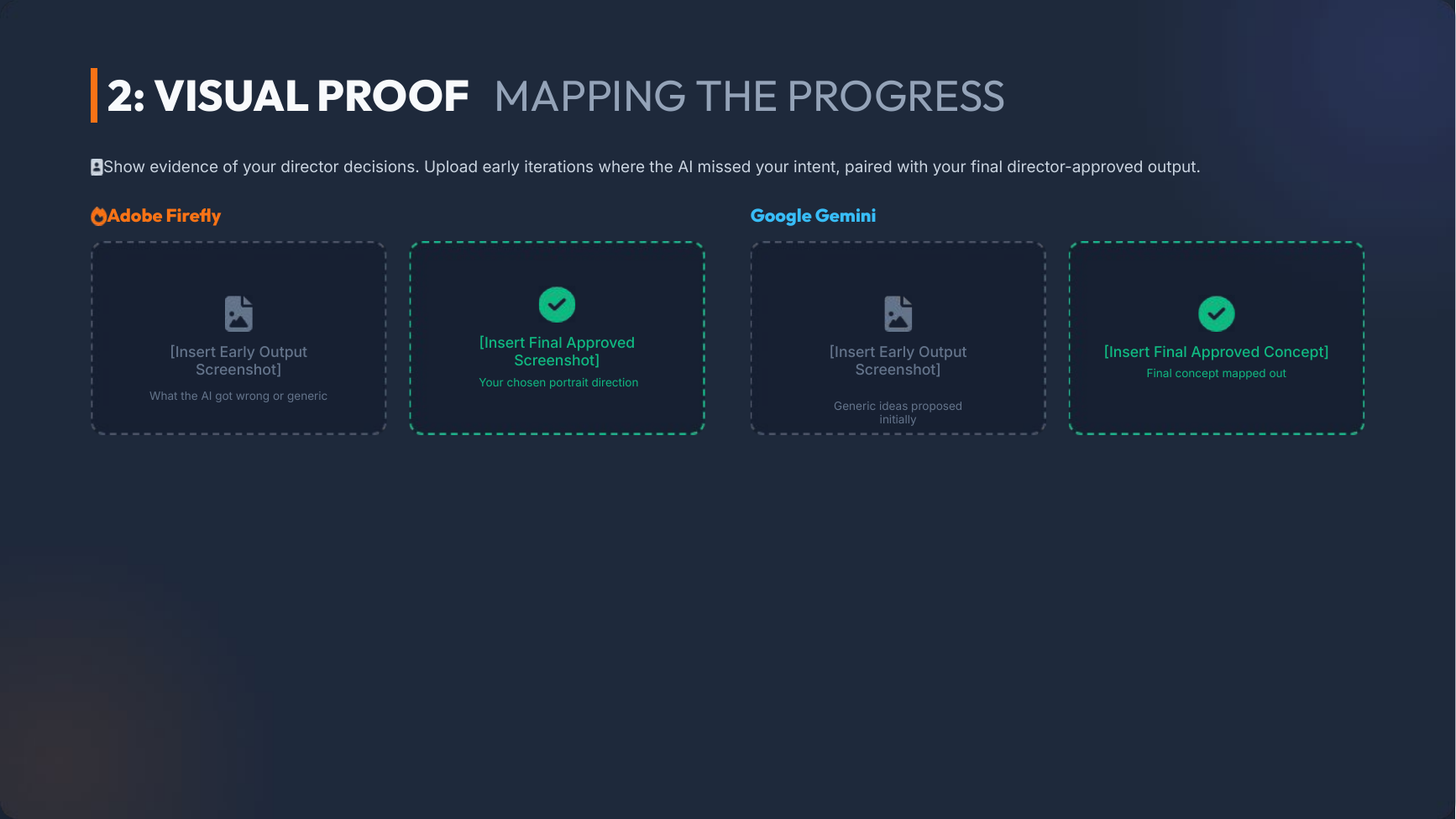
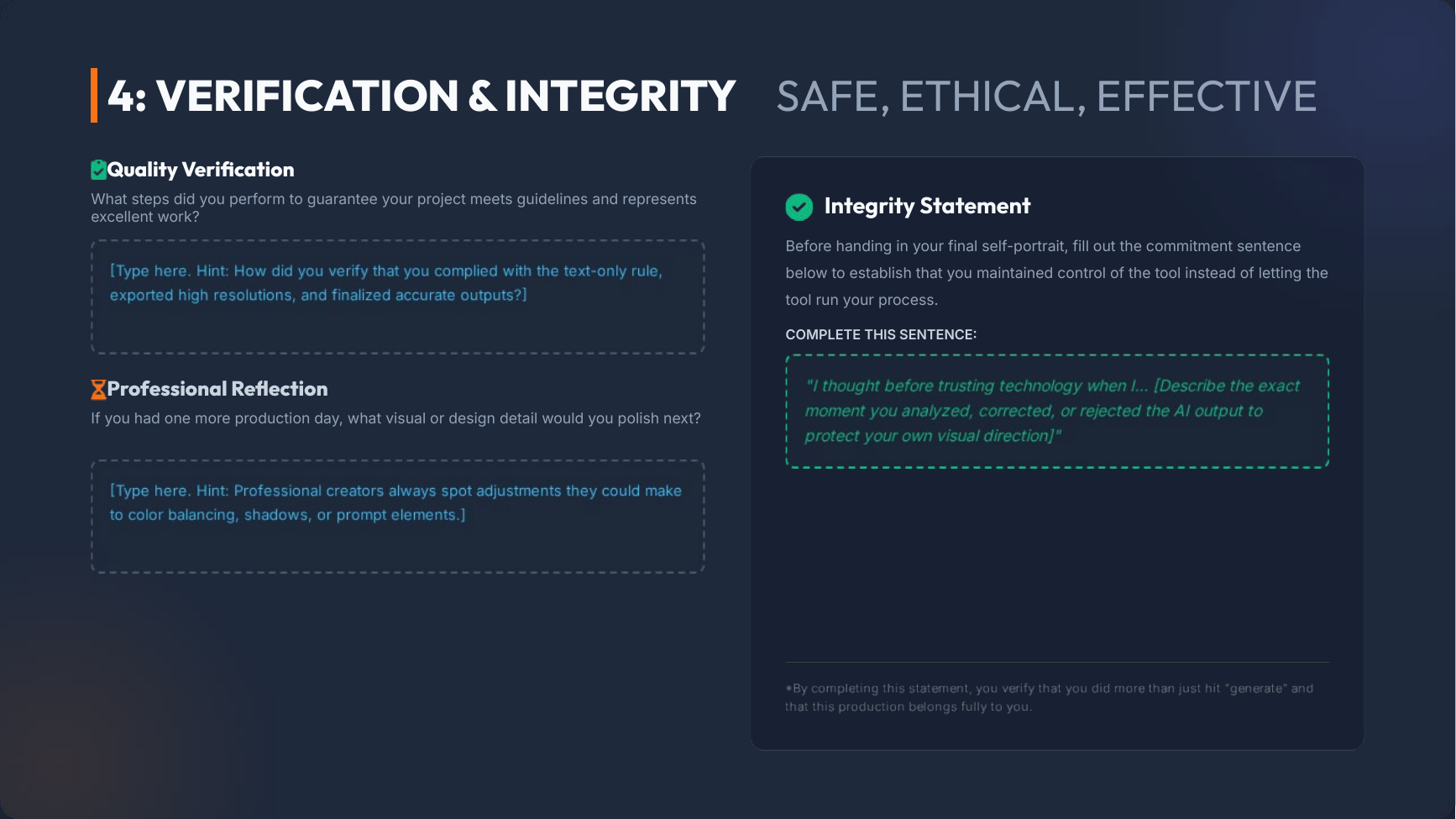
The Design & Skills Document is a production log that asks students to prove their process, explain their choices, verify quality, and remain responsible for the final work. It gives teachers richer evidence than a polished submission alone.

From brief to reflection

A visible production cycle

  1. 01Intent

    Define the audience, purpose, constraints, and creative problem.

  2. 02Process

    Capture sources, prompts, drafts, feedback, and technical evidence.

  3. 03Judgment

    Explain what was accepted, rejected, changed, or verified, and why.

  4. 04Reflection

    Identify what the student learned and where human thinking mattered most.

Assignment to authentic evidence

Micro Movie Magic: Sound Design

A short, audio-first production shows how a clear assignment, the D.S.D., and student reflection work together in an authentic media workflow.

The assignment

Make sound tell the story

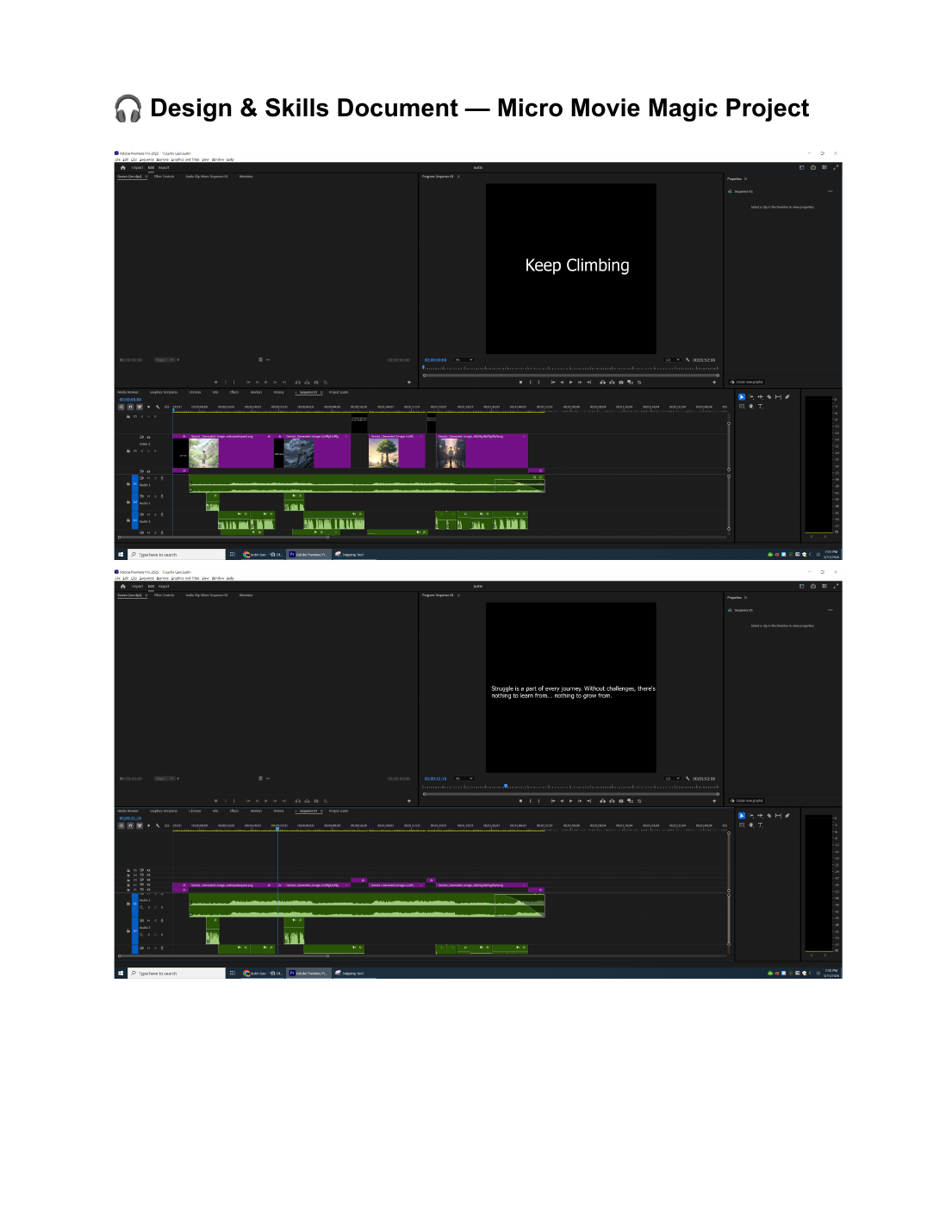
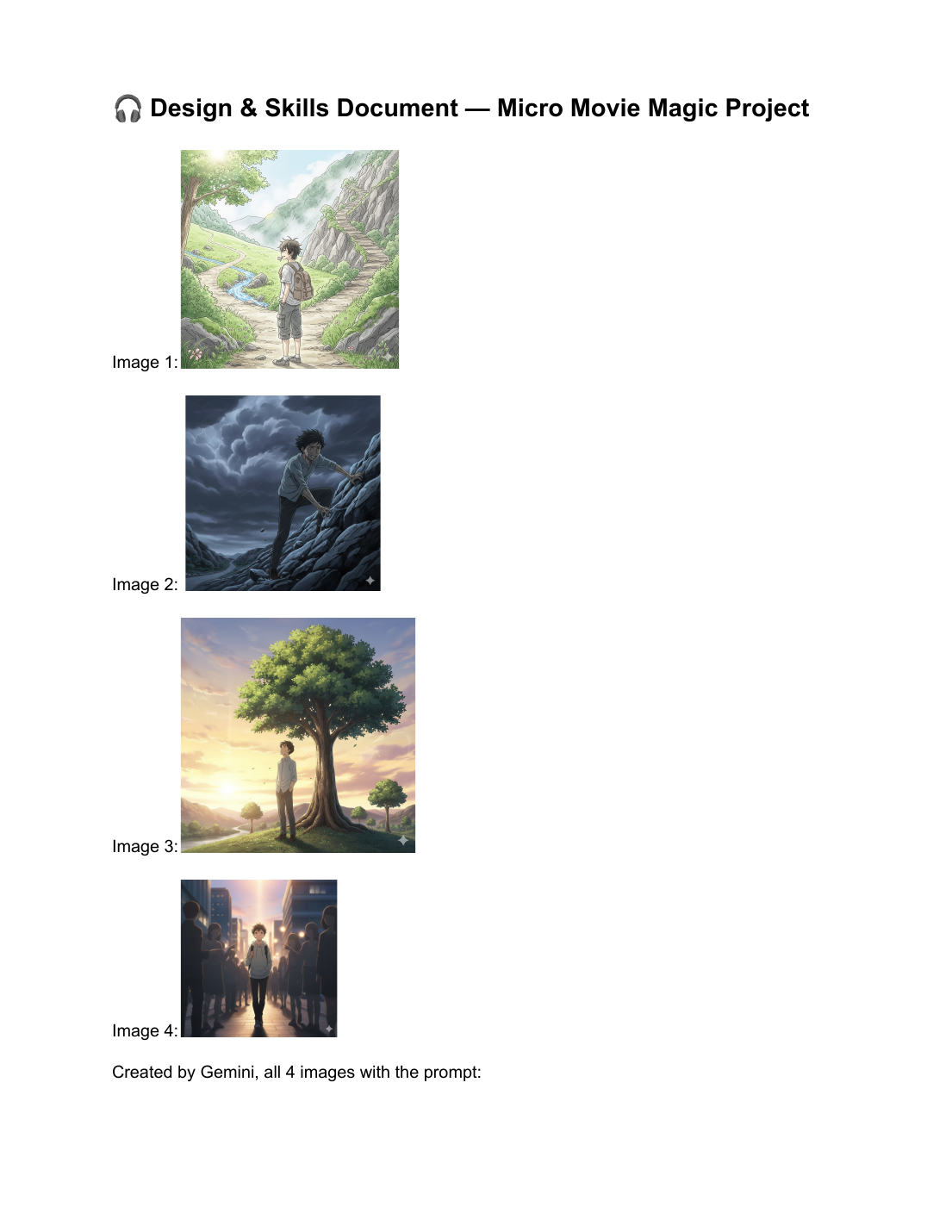
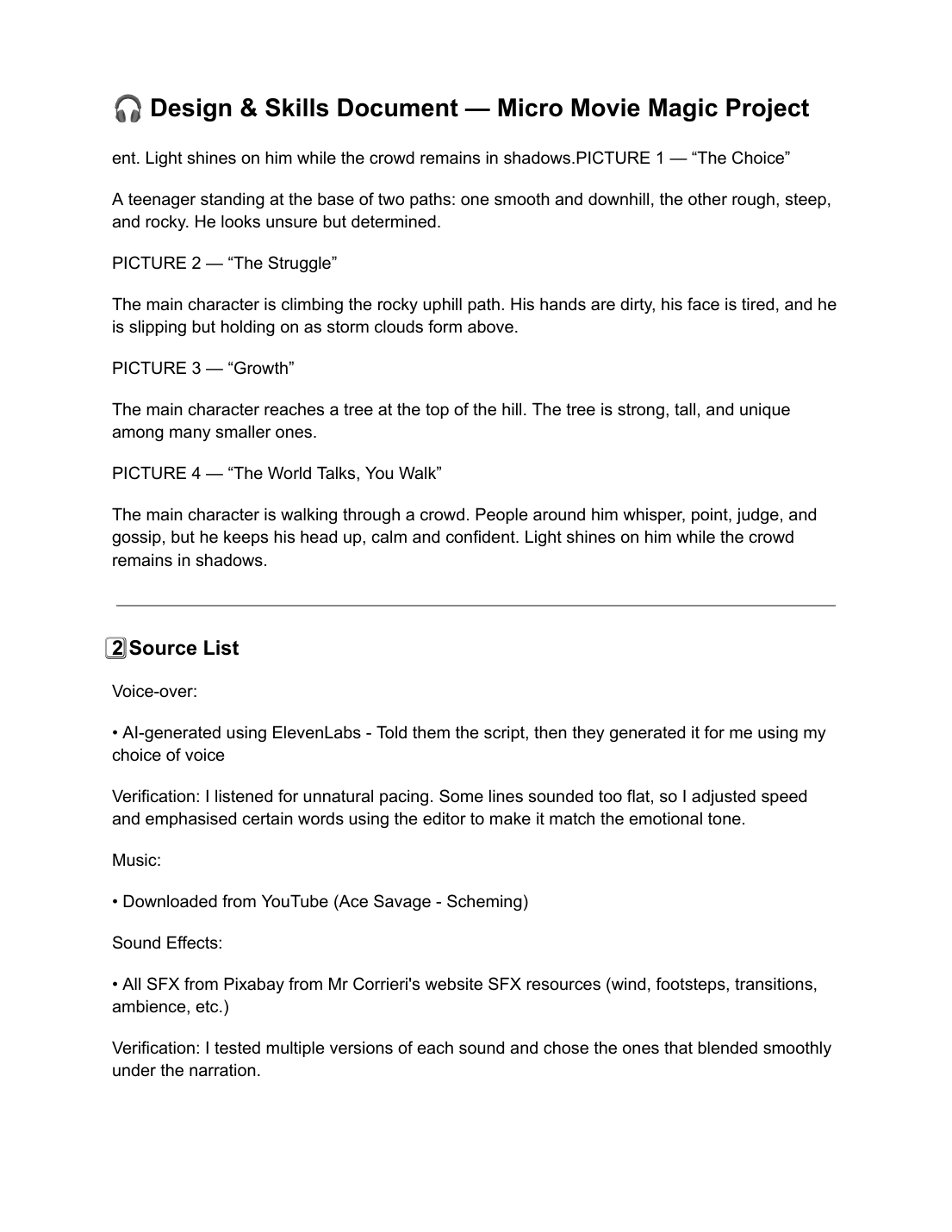
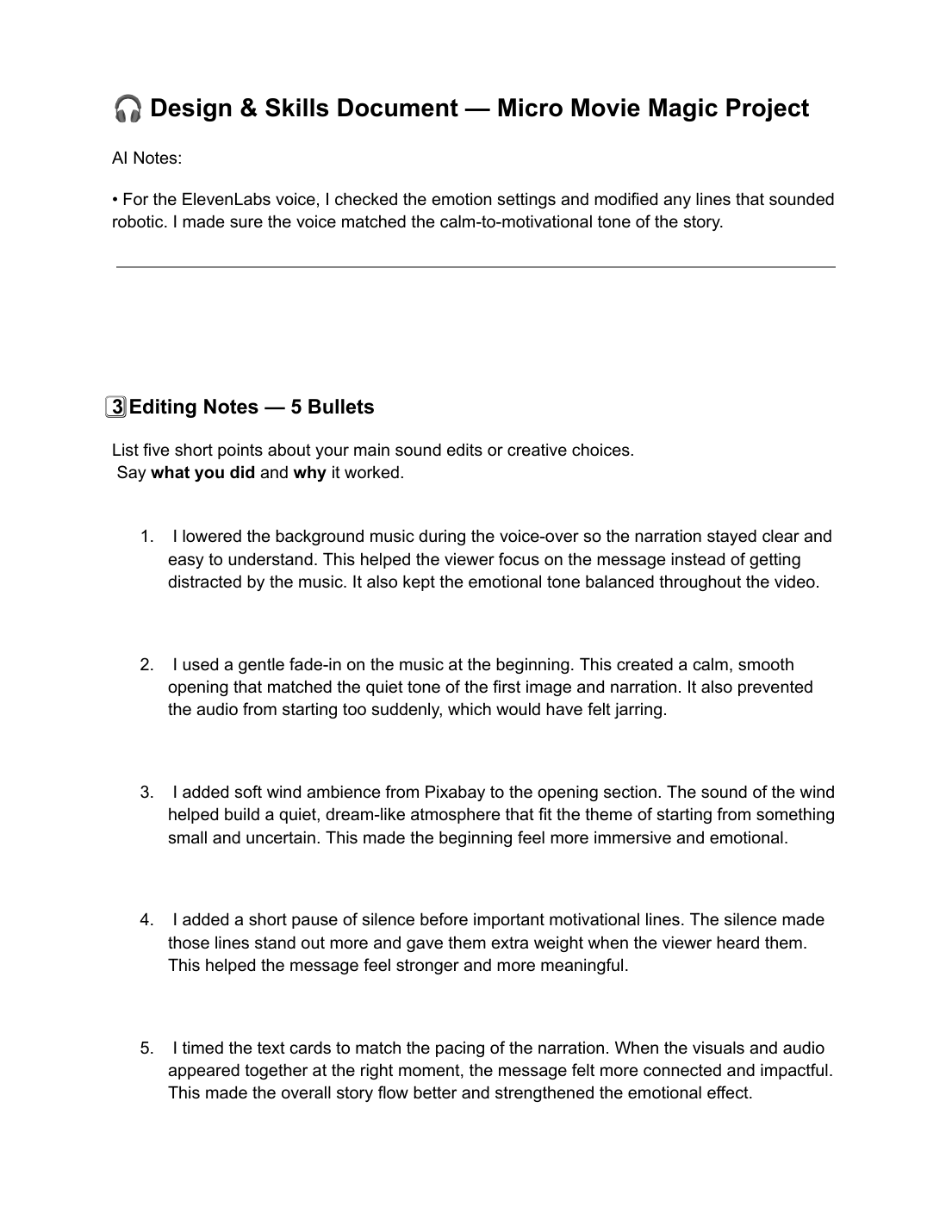
Students create a 45–60 second micro-movie with four images, at least two storytelling modes, 10–15 sound effects, and purposeful use of music, ambience, pacing, and silence.

  • Submit a final film and source list.
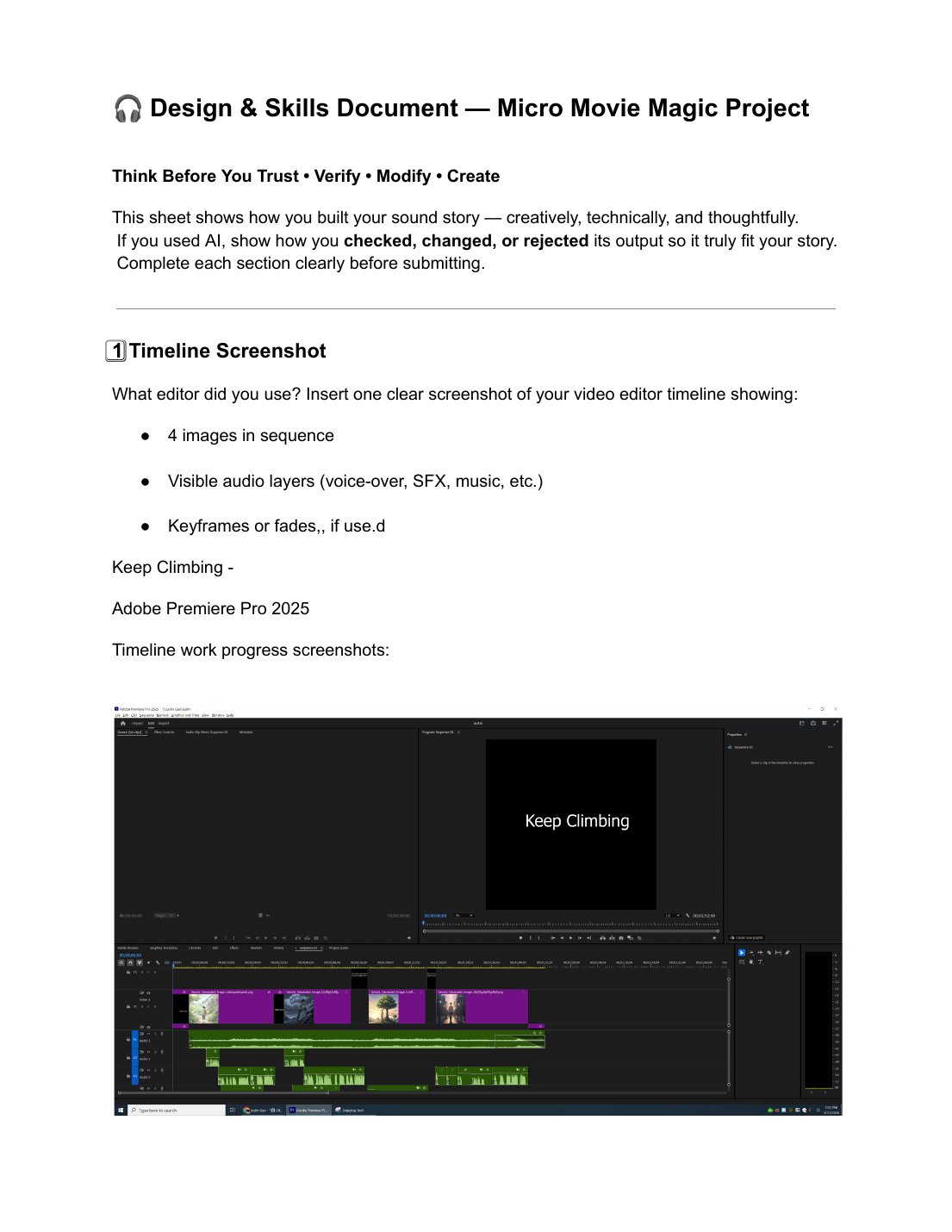
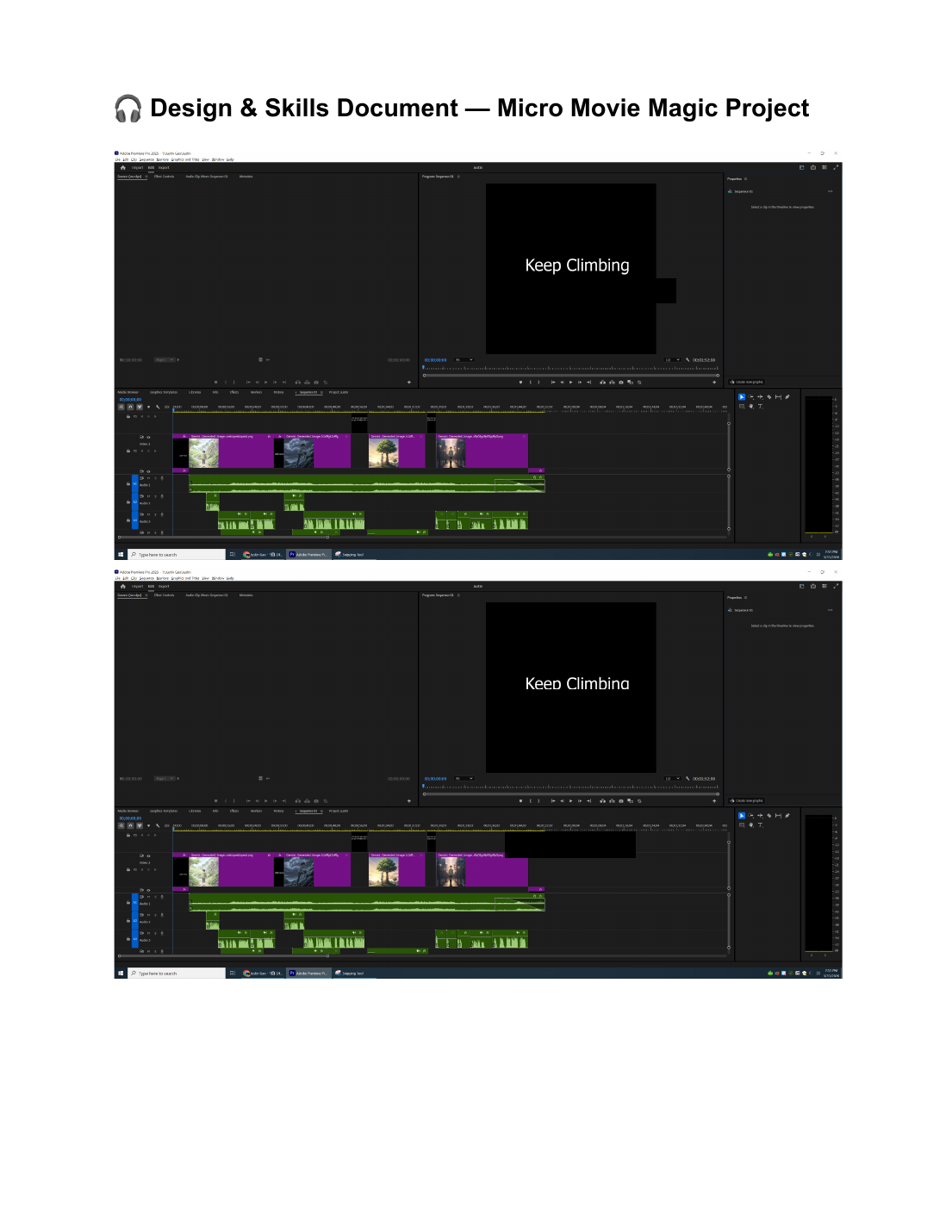
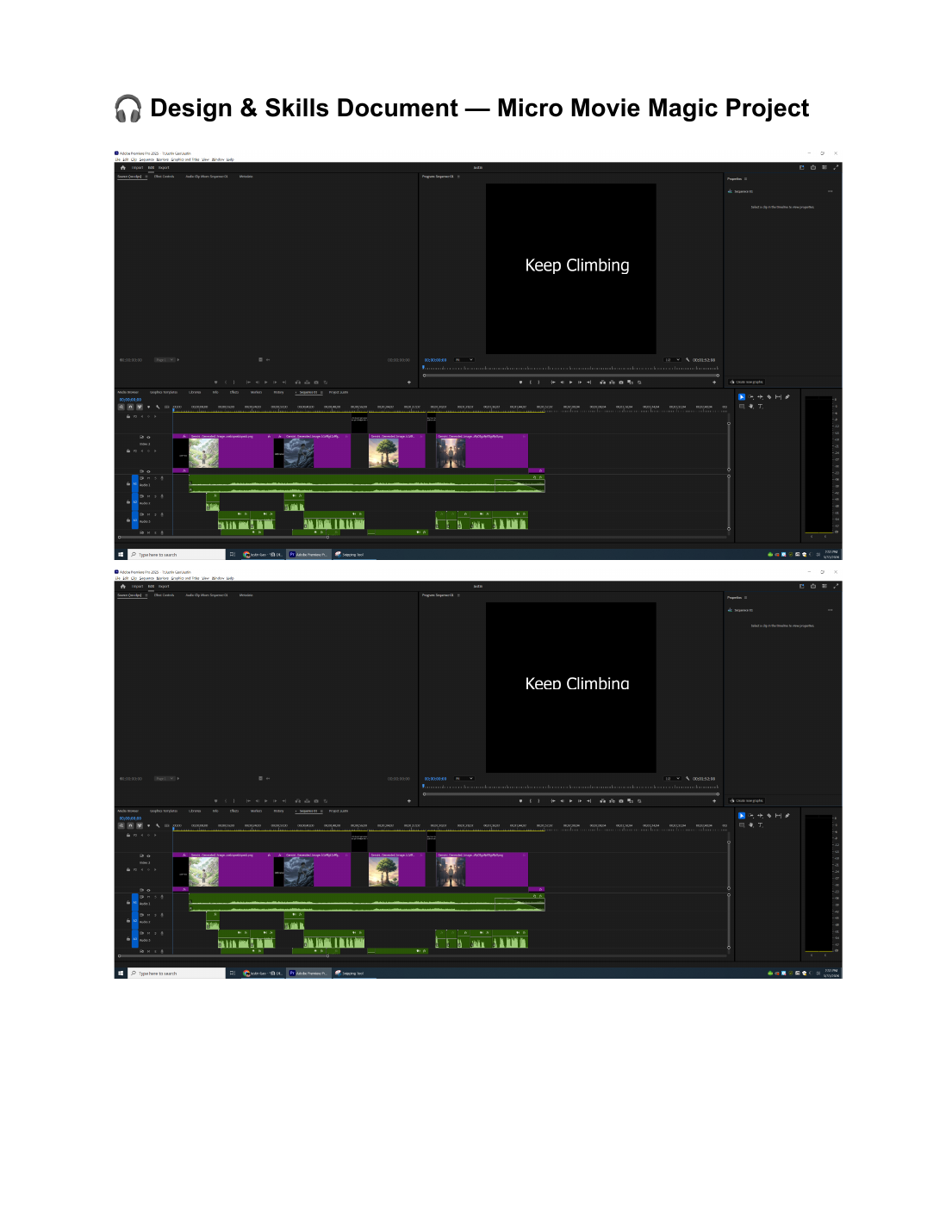
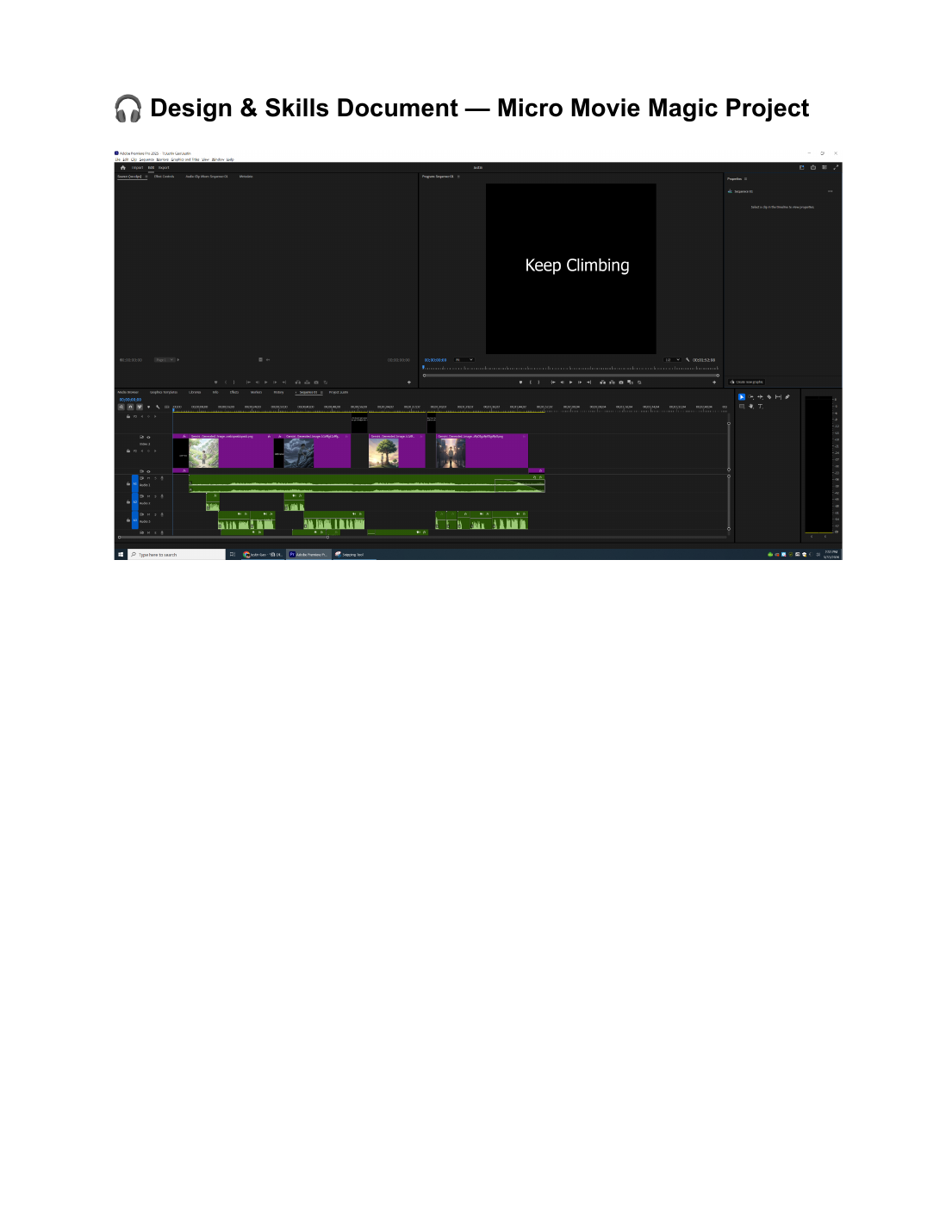
  • Show timeline and production evidence.
  • Explain five key editing decisions.
  • Complete a Trust Audit and reflection.
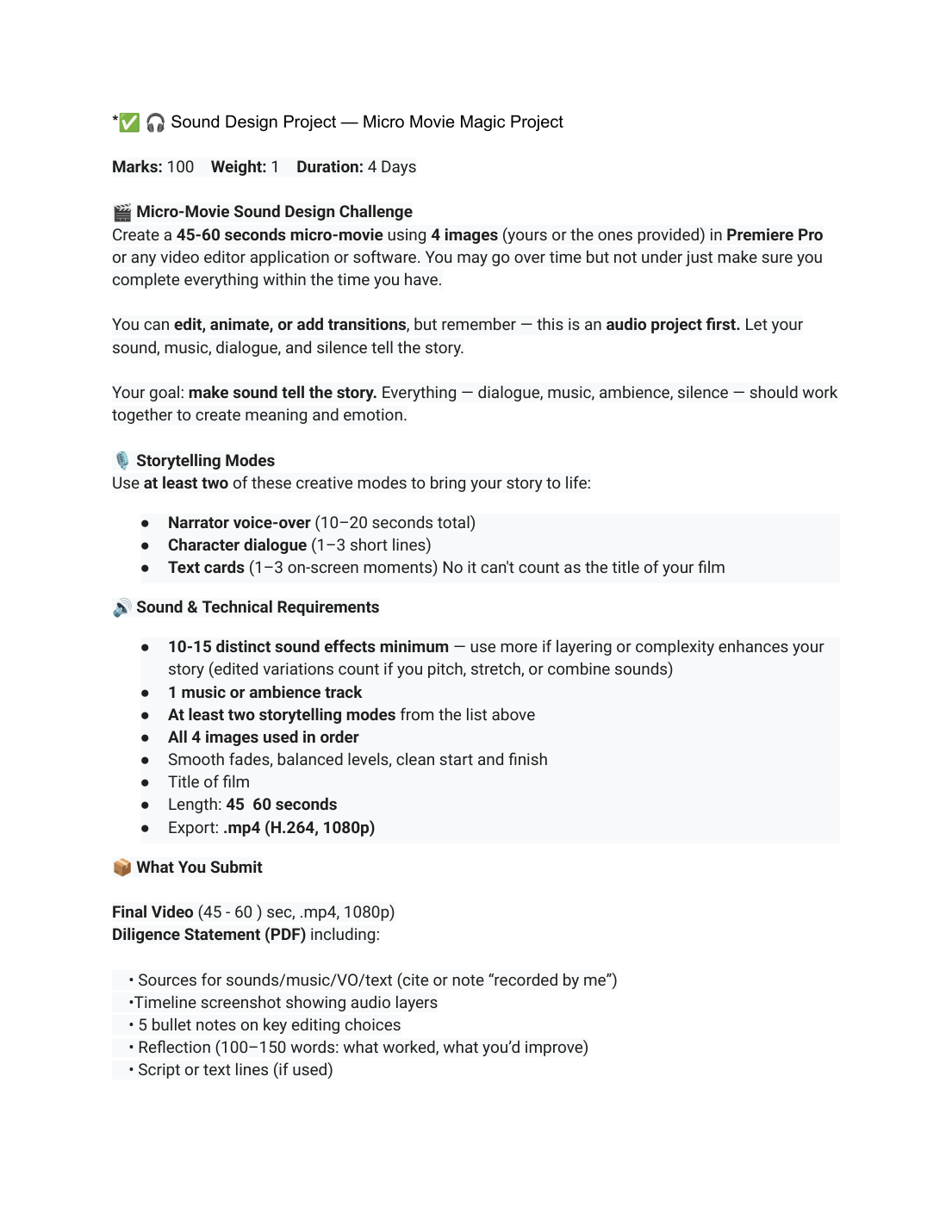
Sound Design Project brief for Micro Movie MagicOpen assignment preview ↗

Anonymous student example

Evidence of decisions, not just completion

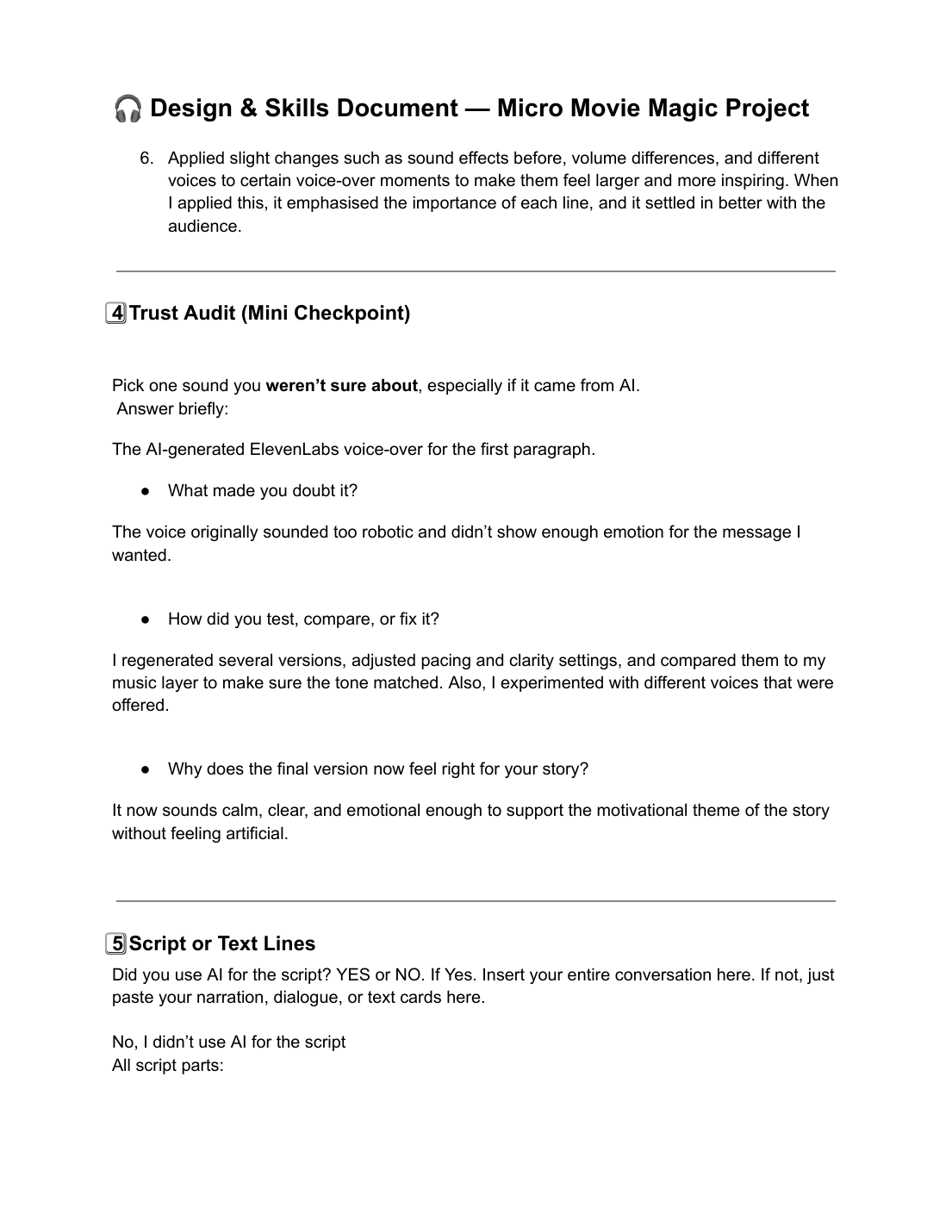
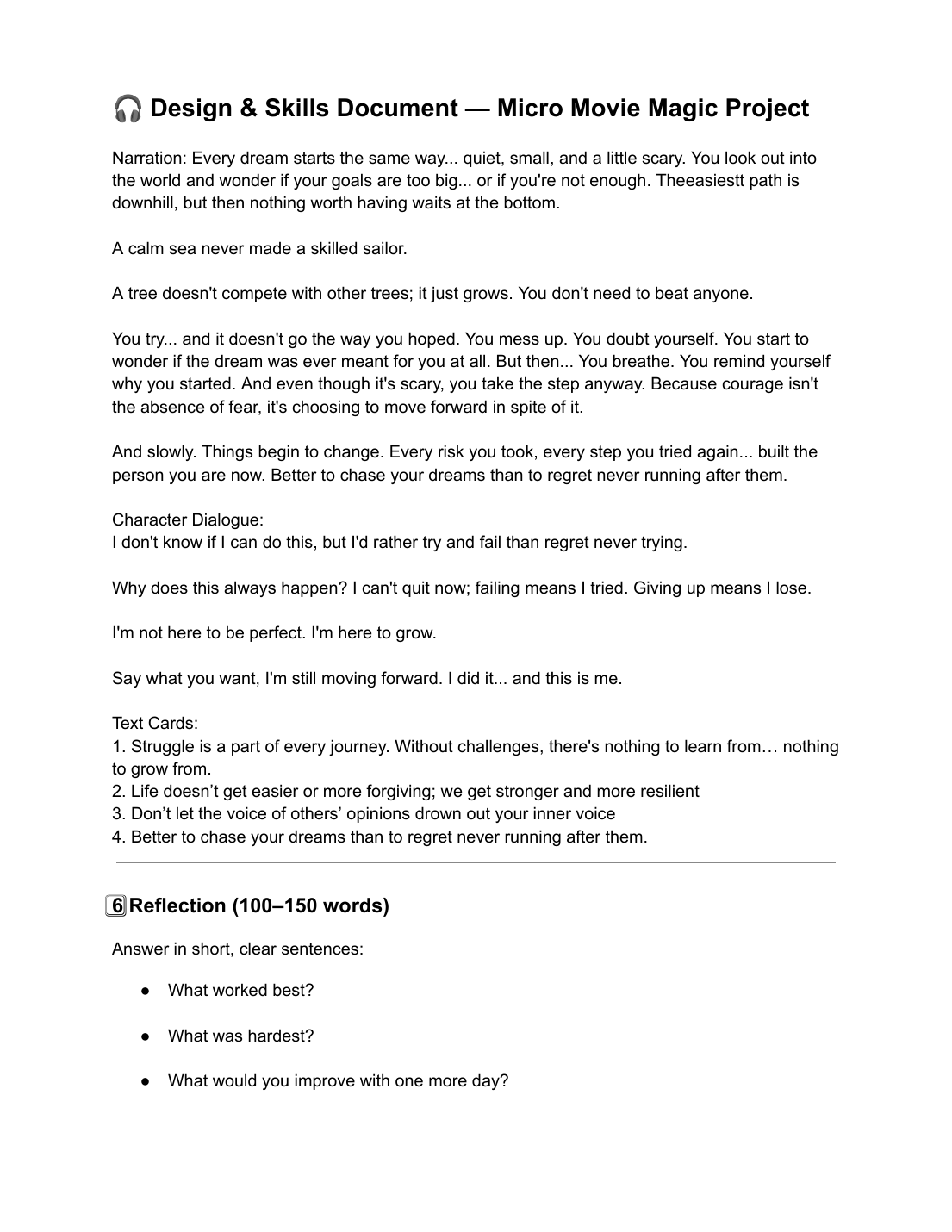
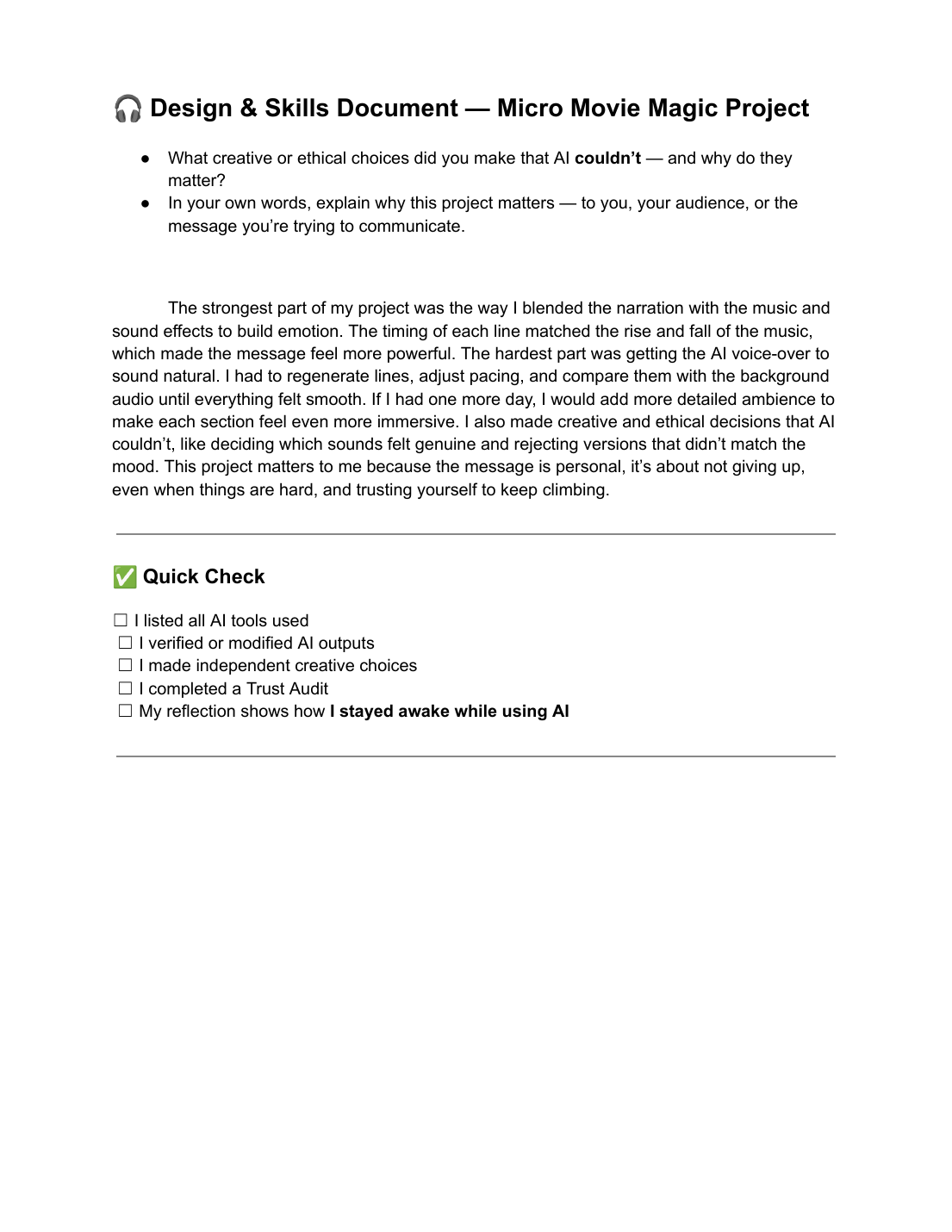
The complete 11-page example shows the Premiere production timeline, generated assets, sources, editing decisions, Trust Audit, script, and final reflection.

View the complete 11-page student example

Student perception snapshot · 53 responses

What students said about AI, creativity, and learning

These Grade 9 and 10 reflections add a broader classroom perspective to the individual student example above. They describe student perceptions from a required, identified course reflection, not a controlled measure of learning gains.

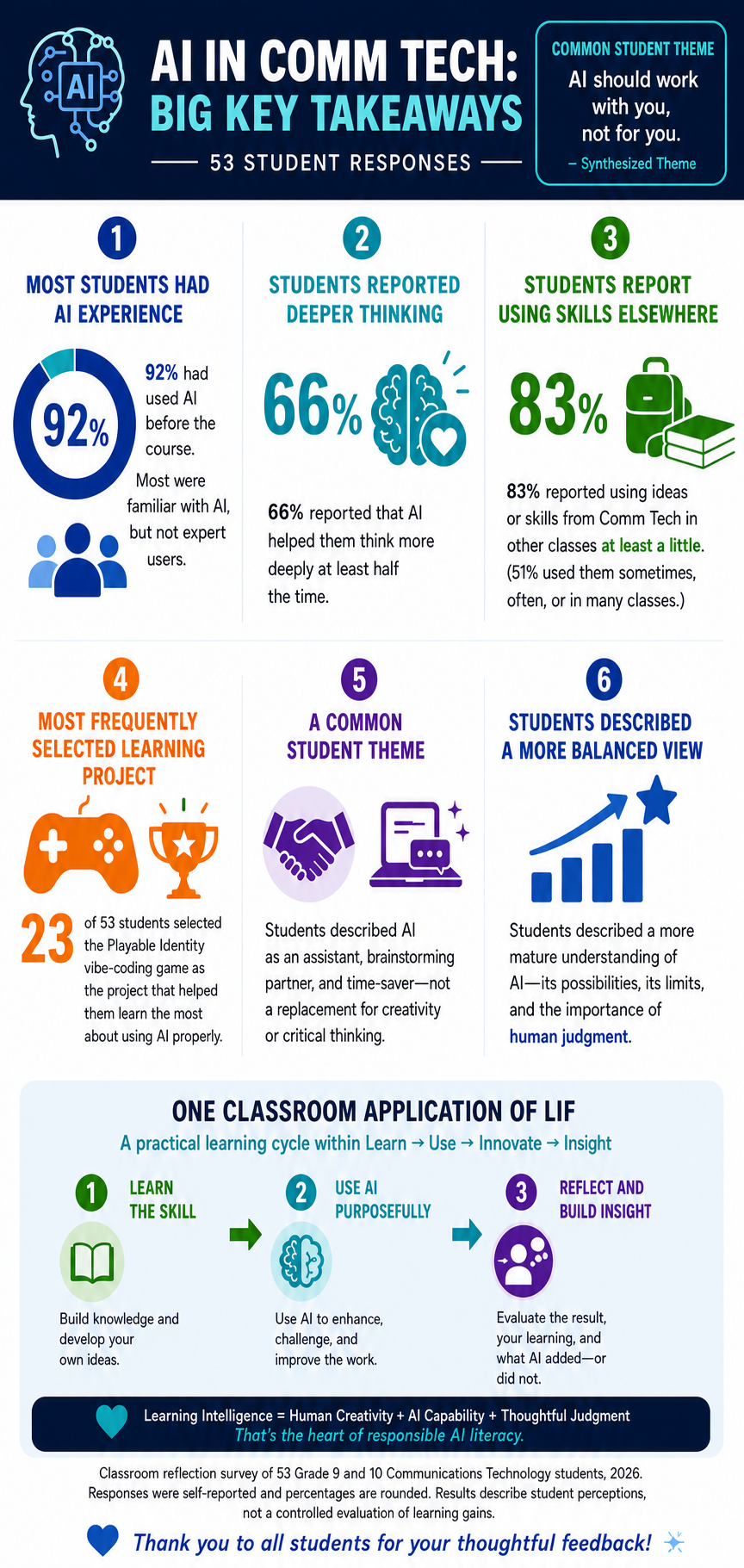
View the classroom survey infographic
AI in Communications Technology infographic summarizing 53 student responses about prior AI experience, deeper thinking, skill transfer, the vibe-coding project, AI as a tool rather than a replacement, and a more balanced view of AI.
Classroom reflection survey of 53 Grade 9 and 10 Communications Technology students, 2026. Responses were self-reported and percentages are rounded.

Continue the practice

Better evidence supports better academic-integrity conversations.

Explore the companion teacher guide on AI detectors, professional judgment, conferencing, and learning-rich assessment.

Explore the Teacher Guide